
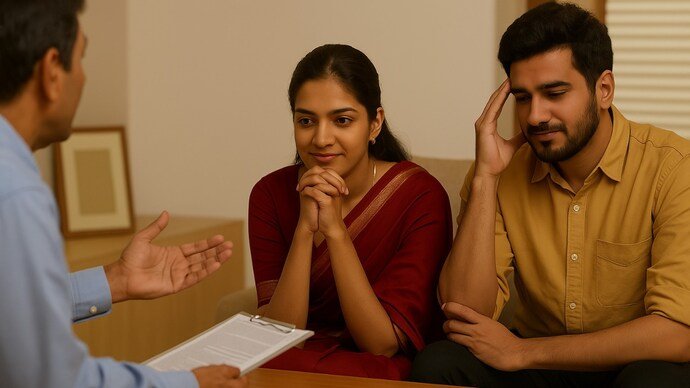
A strong marriage is built through communication, trust, understanding, respect, and the ability to work through difficult periods together. Yet even couples who care deeply about each other can experience recurring disagreements, emotional distance, financial stress, differences in expectations, parenting conflicts, or difficulties rebuilding trust after a painful experience.
When problems continue without resolution, searching for a marriage therapist near me can be a practical step toward understanding what is happening within the relationship. Marriage therapy provides a structured setting where partners can discuss concerns with the guidance of a qualified mental health professional. Rather than simply deciding who is right or wrong, the process may help couples recognize communication patterns, understand emotional needs, and explore healthier ways of responding to conflict.
Seeking professional support does not necessarily mean that a marriage is failing. Some couples seek therapy during a crisis, while others use it to strengthen communication, prepare for a major life transition, or address smaller concerns before they become more difficult.
Table of Contents
What Is Marriage Therapy?
Marriage therapist near me, often referred to as couples therapy or relationship counselling, is a form of professional support designed to address difficulties within an intimate partnership. Although the term “marriage therapy” traditionally refers to married couples, similar therapeutic approaches may also be used with committed partners who are not legally married.
Marriage therapist near me, A therapist may help partners examine how they communicate, how conflicts develop, how emotional needs are expressed, and how past experiences influence current interactions.
For example, imagine one partner repeatedly asks for more communication while the other becomes quiet whenever an argument starts. The first partner may interpret the silence as indifference, while the second may see withdrawal as a way to prevent the argument from escalating. Without understanding the pattern, both people can become increasingly frustrated.
Therapy may help them slow down this cycle and explore what each person is experiencing.

When Should Couples Consider Marriage Therapy?
There is no universal rule about when a couple should seek professional help. Some couples wait until a serious crisis develops, while others seek support as soon as they notice a persistent pattern they cannot resolve independently.
Professional guidance may be worth considering in marriage therapist near me when:
- The same arguments happen repeatedly.
- Conversations quickly become defensive or hostile.
- One or both partners feel emotionally disconnected.
- Trust has been damaged.
- Important decisions consistently cause conflict.
- Intimacy or affection has changed significantly.
- Financial disagreements are creating ongoing tension.
- Parenting responsibilities are a source of repeated arguments.
- Extended-family boundaries are difficult to establish.
- A major life transition is affecting the relationship.
- Partners are considering separation and want structured support.
Searching for a marriage therapist near me may therefore be appropriate even when the relationship is not in immediate crisis. Therapy can sometimes be used to address concerns before resentment and misunderstanding become deeply established.
7 Ways Marriage Therapy May Support a Relationship
1. Healthier Communication
Communication is not simply about talking. It also involves listening, interpreting what another person means, expressing emotions clearly, and responding without immediately becoming defensive.
Couples can fall into predictable communication cycles. One person may criticize because they feel unheard, while the other becomes defensive because they feel attacked. The conversation then moves further away from the original concern.
A therapist may help partners identify these cycles and practice alternative communication methods.
For instance, instead of saying, “You never listen to me,” a person might describe a specific experience: “I felt ignored when I tried to discuss this and the conversation ended quickly.” This approach does not automatically solve the disagreement, but it can make the concern easier to understand.
2. Better Conflict Resolution
Disagreements are a normal part of close relationships. Differences in personality, priorities, habits, finances, family expectations, and lifestyle can naturally create conflict.
The problem is often not the existence of disagreement but the way it is handled. Repeated shouting, insults, avoidance, bringing up unrelated past issues, or refusing to discuss important concerns can make conflicts harder to resolve.
A professional can help couples distinguish between the issue itself and the pattern surrounding it.
When people search for a marriage therapist near me, they may specifically want support with recurring arguments. Therapy can provide a structured environment for learning how to pause, listen, identify the actual concern, and discuss possible solutions.
3. Rebuilding Trust
Trust can be affected by dishonesty, secrecy, broken commitments, financial deception, infidelity, or other experiences that make one partner feel uncertain about the relationship.
Rebuilding trust generally requires more than asking the affected person to “move on.” The underlying concerns may need to be acknowledged and discussed honestly.
A marriage therapist near me may help partners explore accountability, boundaries, transparency, emotional responses, and expectations for moving forward.
Therapy does not erase past events or guarantee reconciliation. Instead, it can provide a professional setting where both people can examine what happened and decide what they need from the relationship going forward.
4. Restoring Emotional Connection
Some couples remain together while gradually becoming emotionally disconnected. Their conversations may focus almost entirely on work, household responsibilities, children, schedules, and finances.
Over time, partners may stop sharing personal thoughts or expressing appreciation. One person may feel lonely despite being in the same home.
A marriage therapist near me can help couples identify what has contributed to emotional distance and explore practical ways to reconnect.
This might include setting aside uninterrupted time together, discussing emotional needs, expressing appreciation, or learning to listen without immediately trying to solve every problem.
5. Managing Family and External Pressures
Marriage can involve more than two people. Extended families, cultural expectations, social obligations, financial responsibilities, and opinions from relatives can influence a couple’s decisions.
Disagreements may arise when partners have different views about how much involvement relatives should have in their personal lives.
For example, one partner may see frequent family involvement as normal and supportive, while the other may experience it as interference. Neither perspective should automatically be dismissed.
A marriage therapist near me may help partners discuss boundaries and develop ways of making decisions as a team.
6. Understanding Different Expectations
People often enter marriage with different assumptions about what married life should look like. One person may expect frequent communication, while another values independence. One may prioritize saving money, while the other prefers spending on experiences.
These differences do not automatically indicate incompatibility.
Problems can develop when expectations remain unspoken. Therapy can help partners identify assumptions, discuss priorities, and understand where compromise may be possible.
For someone looking for a marriage therapist near me, this can be particularly useful when disagreements appear to be about small matters but repeatedly point toward deeper differences in expectations.
7. Support During Major Life Changes
Relationships can be affected by major transitions such as moving to a new city, becoming parents, changing careers, dealing with financial difficulties, adjusting to retirement, or managing significant changes in family responsibilities.
Even positive changes can create stress.
Therapy may provide a neutral space to discuss changing roles, expectations, emotional needs, and practical responsibilities before resentment develops.
Common Marriage Problems That Therapy May Address
Communication Difficulties
Partners may talk frequently but still feel misunderstood. Interrupting, assuming intentions, avoiding difficult topics, or using criticism can prevent meaningful conversations.
Financial Conflict
Money disagreements can involve spending, saving, debt, financial independence, income differences, or competing priorities. Clear communication and agreed expectations can help couples approach these conversations more constructively.
Intimacy Concerns
Emotional or physical intimacy may change over time. Stress, relationship conflict, life transitions, and individual circumstances can influence closeness.
These conversations can feel uncomfortable, but avoiding them may allow misunderstandings to grow.
Parenting Differences
Parents may disagree about discipline, routines, education, responsibilities, or boundaries. Therapy can provide a structured setting for discussing these differences without turning every parenting decision into a personal conflict.
Emotional Withdrawal
Some people respond to conflict by becoming quiet or avoiding interaction. While taking space can sometimes prevent escalation, prolonged withdrawal may leave the other partner feeling rejected or abandoned.
Understanding the reasons behind withdrawal can be an important part of changing the interaction.

How Does Marriage Therapy Work?
The process varies depending on the marriage therapist near me, couple, and concerns involved. An initial session generally provides an opportunity for both partners to explain why they are seeking support.
The therapist may ask about the relationship’s history, current difficulties, previous attempts to resolve problems, and individual goals.
Later sessions may focus on specific patterns. Couples might explore communication, trust, emotional needs, conflict management, intimacy, family boundaries, or major decisions.
Some marriage therapist near me may suggest exercises or conversations between sessions. These activities can help partners practice new approaches in everyday situations rather than limiting progress to the therapy room.
The process is collaborative. Both partners should have opportunities to express concerns and ask questions about the therapeutic approach.
What to Expect During the First Session
The first session can feel unfamiliar, particularly if one or both partners are worried about being judged.
You may be asked to describe what brought you to therapy and what you hope will change. The marriage therapist near me may also ask questions about how disagreements typically begin and what happens afterward.
Before attending, consider making notes about:
- The main problems you want to address
- How long the concerns have existed
- Common situations that trigger conflict
- What you have already tried
- What you hope to achieve
- Questions about confidentiality
- Questions about the therapist’s approach
If you are evaluating a marriage therapist near me, the first appointment can also help you determine whether you feel comfortable with the professional’s communication style.
How to Choose a Suitable Marriage Therapist
Choosing a therapist is a personal decision, and the best fit can vary between couples.
Check Professional Qualifications
Look for an appropriately qualified mental health professional with relevant training and experience in relationship or couples work.
If you have a specific concern, such as premarital counselling, trust difficulties, or repeated conflict, ask whether the professional works with those issues.
Consider Therapeutic Approach
Different marriage therapist near me may use different approaches. You can ask how sessions are generally structured and what role each partner is expected to play.
A professional should be able to explain the process without promising a guaranteed outcome.
Evaluate Communication Style
Both partners should have an opportunity to speak. A marriage therapist near me should facilitate discussion rather than turn sessions into a competition over who is correct.
It is reasonable to ask questions about how disagreements are managed during sessions.
Consider Accessibility
Searching for a marriage therapist near me often reflects a practical need for convenient appointments. A location that is reasonably accessible from home or work may make regular attendance easier.
However, location should not outweigh professional suitability.
Understand Confidentiality
Ask how confidentiality works in couples therapy and whether there are specific policies regarding individual communications or information shared privately with the therapist.
Understanding these boundaries beforehand can help prevent confusion later.
Online or In-Person Marriage Therapy?
Both online and in-person sessions may be suitable depending on the couple’s circumstances.
In-person therapy provides a dedicated setting away from household distractions. Some couples may find it easier to focus when they physically attend an appointment together.
Online sessions can be convenient for people with demanding schedules, travel limitations, or different work locations. They may also provide access to professionals outside the immediate neighbourhood.
When considering a marriage therapist near me, think about privacy, technology, scheduling, travel time, and comfort with video communication.
The most suitable format depends on the nature of the concerns and the professional’s assessment of what can be addressed effectively through that format.

Practical Strategies Couples Can Try
Professional therapy can be supported by small changes in daily interactions.
Schedule Difficult Conversations
Avoid beginning sensitive discussions when one or both partners are exhausted or already angry. Choose a calmer time whenever possible.
Use Specific Language
Instead of making broad statements such as “You never care,” describe the specific behaviour and its emotional impact.
Listen Without Immediately Fixing
Sometimes a partner wants to feel understood before discussing solutions. Ask whether they want listening, advice, or problem-solving.
Take Constructive Breaks
If an argument becomes overwhelming, a short pause may help. Make it clear that the conversation will be revisited rather than using silence as punishment.
Protect Time for Connection
Set aside time that is not focused on household administration. Even a simple conversation without phones or other distractions can help partners reconnect.
Appreciate Small Efforts
Acknowledging everyday contributions can help partners feel noticed. Appreciation does not have to be elaborate to be meaningful.
When Professional Help Is Especially Important
Professional support may be particularly useful when disagreements are persistent, emotional distress is increasing, trust has been seriously damaged, or communication repeatedly breaks down.
However, relationship therapy should not be treated as the only response to physical violence, threats, coercive control, stalking, or situations where one partner is afraid of the other. Safety should take priority, and appropriate professional, legal, or emergency support may be necessary.
Similarly, if either partner is experiencing severe emotional distress or thoughts of self-harm, immediate mental health or emergency support should be sought.
A marriage therapist near me can be one part of a broader support system, but serious safety concerns require an appropriate response beyond ordinary relationship counselling.
Common Misconceptions About Marriage Therapy
“Therapy Means the Marriage Is Failing”
Not necessarily. Couples seek therapy for many reasons, including communication improvement, premarital preparation, adjustment to life changes, and relationship maintenance.
“The Therapist Will Take One Person’s Side”
A professional therapeutic process generally aims to understand the concerns and interaction patterns of everyone involved.
“Therapy Will Tell Us Whether to Stay Together”
Therapy is not necessarily about making the decision for a couple. It can help people explore their concerns, values, boundaries, and options.
“One Session Will Solve Everything”
Relationship patterns often develop over time. Changing them may require practice and patience.
“Only One Partner Needs to Change”
Each person is responsible for their own behaviour. At the same time, relationship dynamics involve interactions between partners, which may require both people to examine their contributions to recurring patterns.
What Makes a Good Therapy Experience?
A constructive therapy experience should provide a respectful environment where concerns can be discussed honestly.
Both partners should understand what the process involves and have reasonable opportunities to ask questions. Progress should be viewed realistically rather than measured against promises of guaranteed relationship outcomes.
If you have been searching for a marriage therapist near me, consider whether the professional:
- Communicates clearly
- Has relevant professional training
- Explains confidentiality
- Encourages respectful dialogue
- Understands the concerns you want to address
- Provides realistic expectations
- Offers a practical session format
- Respects the autonomy of both partners
The right professional relationship can make it easier to engage honestly with difficult subjects.

Frequently Asked Questions
1. How can I find a suitable marriage therapist near me?
Look for an appropriately qualified professional with relevant experience in couples or relationship therapy. Consider professional background, communication style, location, availability, confidentiality policies, session format, and whether the therapist’s approach suits your concerns.
2. Should we wait until our marriage is in crisis before seeking therapy?
No. Couples may seek professional support when they notice recurring communication problems, emotional distance, unresolved disagreements, or difficulties adjusting to major changes. Earlier support may provide an opportunity to address concerns before they become more complicated.
3. Do both partners need to attend marriage therapy?
Joint sessions are common in relationship-focused therapy, but circumstances vary. Depending on the concerns and professional assessment, individual sessions may sometimes also be considered.
4. Can marriage therapy help with trust issues?
Therapy may provide a structured environment for discussing damaged trust, accountability, boundaries, communication, and expectations. Outcomes vary, and rebuilding trust generally requires ongoing effort from the people involved.
5. How long does marriage therapy take?
There is no fixed duration. The number and frequency of sessions can depend on the nature of the concerns, goals, circumstances, and progress made during therapy.
6. Is online marriage therapy an option?
Online therapy can be suitable for some couples, particularly when travel or scheduling makes in-person appointments difficult. Privacy, technology, comfort, and the nature of the concerns should be considered when choosing the format.
7. What should we discuss in our first session?
Explain the main concerns, recurring conflicts, significant relationship changes, and what you hope to improve. You can also ask about the therapist’s qualifications, approach, confidentiality, session structure, and expectations for the process.
Conclusion
Marriage difficulties can arise for many reasons, and seeking support does not automatically mean that a relationship is beyond repair. Communication problems, trust concerns, emotional distance, family pressures, financial disagreements, parenting differences, and major life transitions can all create challenges that may be difficult to navigate without outside guidance.
Marriage therapy offers a structured environment where partners can slow down recurring conflict patterns, communicate more clearly, understand different perspectives, and explore practical changes. It does not guarantee a particular relationship outcome, but appropriate professional support may help couples approach difficult decisions and conversations with greater clarity.
For anyone searching for a marriage therapist near me, the most important consideration should be finding an appropriately qualified professional who understands relationship concerns and provides a respectful, confidential, and balanced environment. Accessibility matters, but it should be considered alongside qualifications, relevant experience, communication style, therapeutic approach, and practical expectations.
Ultimately, healthy relationships require ongoing communication and willingness to understand one another. When repeated problems begin affecting emotional well-being or the quality of a marriage, seeking a marriage therapist near me can be a constructive step toward understanding the situation and exploring appropriate next steps.
Contact Information

Ms. Sumita Jhaa
Website: https://sumipsychology.com/
Address:
124/5 Dodakanhali,
Sarjapura Road,
Bangalore – 560035
Phone:
+91 91566 55161